Research

Research

Study on the Exploration of Virtual Reality (VR) Technology among Teachers and Students in Perlis

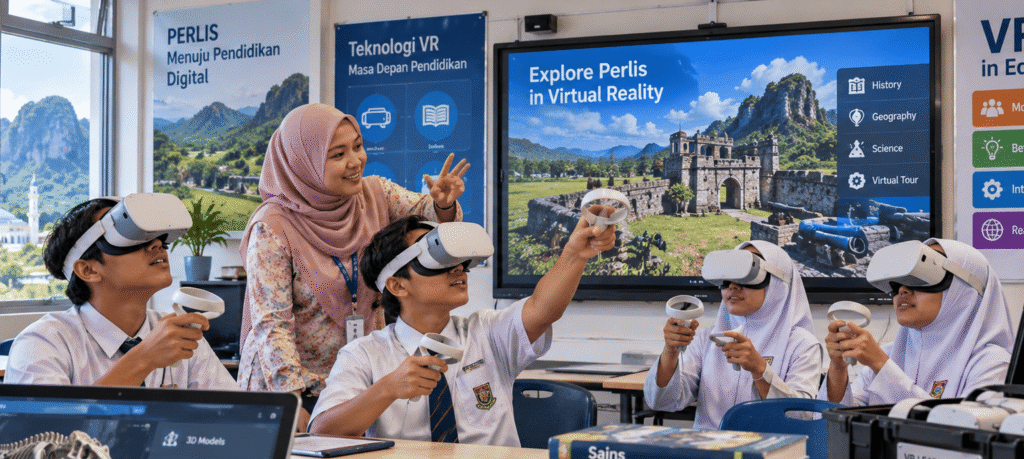
This post summarizes the paper titled ‘Study on the Exploration of Virtual Reality (VR) Technology among Teachers and Students in Perlis’. Click here to read: DOI In 21st-century education, Virtual Reality (VR) technology has emerged as a transformative tool capable of creating immersive, three-dimensional digital environments that simulate real-world experience. By enabling hands-on interaction with complex concepts—such as exploring space, performing surgical simulations, or observing molecular reactions—VR significantly enhances student engagement, motivation, and conceptual understanding compared to traditional passive learning methods. To evaluate the readiness and acceptance of this technology in regional Malaysian education, a quantitative study assessed 90 teachers and students across schools in Perlis using the Virtual Reality Awareness and Knowledge Scale (VRAKS). Findings revealed high enthusiasm and positive perceptions toward VR integration. While 60.7% of respondents reported not using VR comprehensively yet, an overwhelming majority agreed that VR assists in teaching (90.7%) and increases student motivation (94.3%). Statistical analysis (ANOVA) demonstrated strong positive correlations between approval of VR and the intention to adopt it in classroom instruction (r=0.75,p<0.001), with female respondents and complete users showing significantly higher acceptance scores. Despite the strong willingness to adopt VR, its implementation in Perlis remains limited due to key systemic challenges. Teachers and students identified primary barriers such as a lack of VR devices, high equipment costs, insufficient technical training for educators, and inadequate network and digital infrastructure, particularly in rural schools. To overcome these obstacles and establish Perlis as a pioneer in immersive education, the study outlines strategic recommendations for policymakers and educational authorities: Infrastructure & Equipment: Invest in high-speed internet connectivity, supply subsidized VR sets, and set up centralized VR learning centers for public and school access. Teacher Training: Conduct comprehensive training programs and practical workshops to build educators’ confidence in integrating VR into lesson plans. Curriculum Integration: Develop localized VR modules tailored to subjects like science, history, geography, and technical/vocational training. Strategic Partnerships: Collaborate with local technology companies, universities, and industry partners for software development, equipment sponsorship, and corporate social responsibility (CSR) initiatives.
Research

A Conceptual Persuasive Development Framework to Change Students’ Behaviour in Massive Open Online Courses: A Review

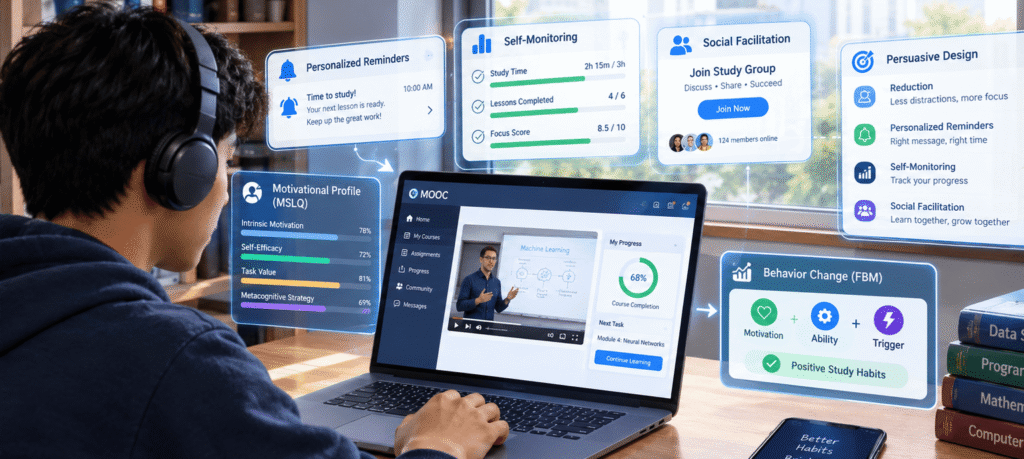
This post summarizes the paper titled ‘A Conceptual Persuasive Development Framework to Change Students’ Behaviour in Massive Open Online Courses: A Review’. Click here to read: DOI In the realm of Massive Open Online Courses (MOOCs), a persistent paradox haunts virtual educators: despite providing unprecedented global access to higher education, these platforms suffer from notoriously high dropout rates and low completion statistics. Because MOOCs feature a very high student-to-instructor ratio and lack real-time human supervision, online learners frequently fall victim to self-regulatory failures. Unsupervised students often succumb to online distractions—ranging from social media streams to online gaming—leading to severe academic procrastination and eventual abandonment of their courses. To solve this digital engagement crisis, a team of researchers from Universiti Kebangsaan Malaysia introduced a framework called PEDAL (Persuasive E-Learning Development). This conceptual model bridges the gap between educational psychology and system design by systematically combining students’ internal motivational factors and self-regulated learning strategies with proven persuasive design principles. Rather than treating learning technology as a passive repository of video lectures and reading materials, the PEDAL framework advocates for an active, human-centered approach that persuasive software components can utilize to systematically nudge students toward healthier study habits. The implementation of the PEDAL framework unfolds across three structured phases. First, educators measure and identify students’ specific motivational drivers and learning strategies using validated instruments like the Motivated Strategies for Learning Questionnaire (MSLQ). Next, system developers and pedagogical experts map these specific psychological profiles to corresponding technical design principles from the Persuasive System Development (PSD) model—integrating supportive features such as reduction, personalized reminders, self-monitoring tools, and social facilitation. Finally, the framework evaluates actual behavior changes against models like the Fogg Behavior Model (FBM), ensuring that optimal triggers, motivation, and user ability align to reinforce positive habits. Ultimately, the study emphasizes that technology alone cannot change behavior without directly catering to the user’s psychological state. By continuously testing study habits and looping back to refine software features whenever target outcomes fall short, PEDAL turns MOOC platforms into responsive, persuasive learning environments. While future research calls for broader validation by psychologists and pedagogical experts, the framework establishes a crucial blueprint for designing online learning systems that actively retain students, curb procrastination, and foster meaningful educational success.

Research

The development direction and challenges of STEM integration: a systematic literature review

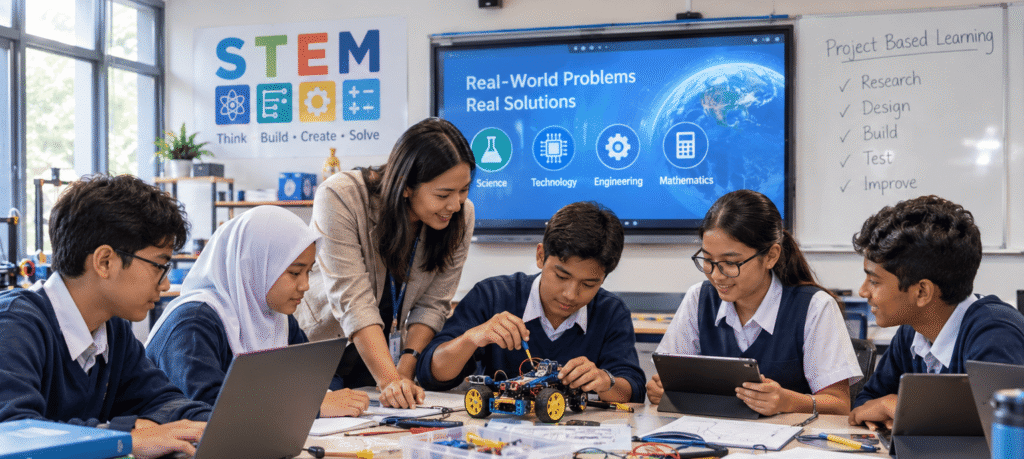
This post summarizes the paper titled ‘The development direction and challenges of STEM integration: a systematic literature review’. Click here to read: DOI As technology, artificial intelligence, and digital industries rapidly transform the global economy, educational systems worldwide face a pressing challenge: traditional single-discipline teaching is struggling to prepare K-12 students with the complex problem-solving abilities required for modern workforces. To address student disengagement in core subjects like mathematics and science, educators have increasingly championed STEM integration—an approach that breaks down rigid subject boundaries to connect Science, Technology, Engineering, and Mathematics through authentic, real-world learning. A systematic literature review published in the Journal of Education and Learning (2026) analyzed 62 peer-reviewed studies published between 2013 and 2023 from Web of Science to map the development direction, pedagogical approaches, and key challenges surrounding STEM integration in K-12 education. The review established a holistic, closed-loop framework for K-12 STEM integration comprising six interconnected components: STEM curriculum, STEM pedagogy, STEM projects, STEM models, STEM teachers, and STEM evaluation. Across these areas, the study highlighted several critical trends shaping the future of integrated education: The STEM curriculum is shifting away from isolated instruction toward interdisciplinary and multidisciplinary frameworks. This integration ranges from correlation fields (aligning standalone subjects around shared concepts) to broad fields integration, where traditional disciplinary boundaries disappear entirely in favor of thematic, real-world projects like robotics or automated systems. Furthermore, STEM boundaries are expanding to incorporate additional domains—such as STEAM (adding Arts), medical engineering, history, and humanities—to foster well-rounded 21st-century skills. Traditional teacher-centered instruction is rapidly giving way to student-centered learning methodologies. The review identified Problem-Based Learning (PBL), Project-Based Learning (PjBL), and Engineering Design-Based Learning (EDL) as the dominant pedagogical strategies driving effective STEM integration. These approaches actively engage students in authentic research, inquiry, and design processes that deepen cognitive engagement, build research capabilities, and stimulate interest in future STEM careers. STEM integration models serve as vital bridge mechanisms connecting abstract curriculum goals with practical classroom delivery. These models frequently embed modern technological competencies—such as computational thinking, machine learning, data analysis, and maker lab activities—directly into core K-12 subjects, helping learners solve real-world problems while maintaining active engagement. Despite positive learning outcomes, the study identified significant hurdles to widespread implementation. Transitioning to integrated STEM requires high levels of cross-subject collaboration among teachers, major structural modifications to traditional school schedules, and extensive professional development. Additionally, the literature reveals a notable gap in research concerning the internal impacts of STEM integration—specifically regarding how integrated curricula directly influence student STEM identity, long-term STEM literacy, and standardized learning outcomes. Addressing these structural constraints and research gaps remains essential to unlocking the full potential of interdisciplinary STEM education.

Research

An Inspection of Learning Management Systems on Persuasiveness of Interfaces and Persuasive Design: A Case in a Higher Learning Institution

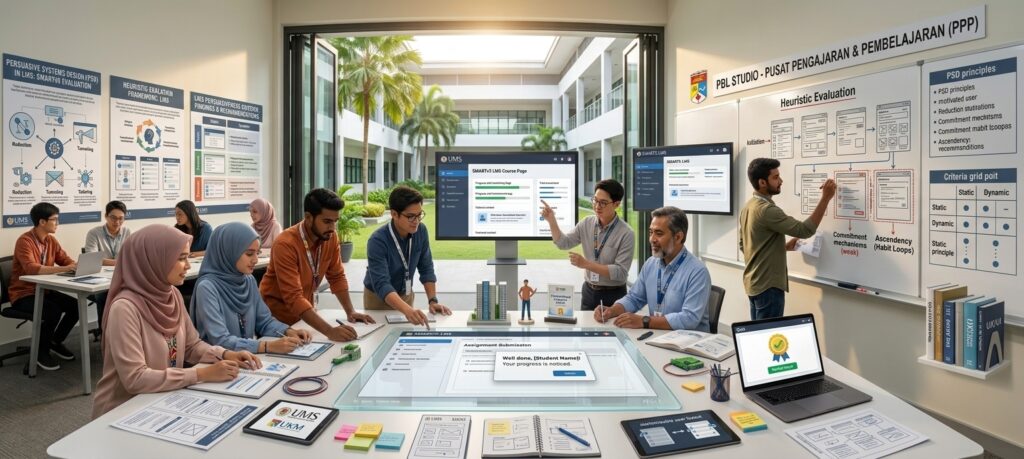
This post summarizes the paper titled ‘An Inspection of Learning Management Systems on Persuasiveness of Interfaces and Persuasive Design: A Case in a Higher Learning Institution’. Click here to read: DOI Learning Management Systems (LMS) are the backbone of modern tertiary education, enabling universities to deliver course materials, facilitate discussions, and track student progress. However, despite their widespread adoption, online platforms frequently suffer from low engagement, student procrastination, and declining completion rates. Rather than incurring high costs by building entirely new systems, evaluating and refining existing platforms through persuasive design—technology intended to intentionally guide and modify human behavior without coercion—offers a far more effective solution. A study published in the International Journal of Advanced Computer Science and Applications(2022) conducted a heuristic inspection of two LMS versions (SMART2 and SMARTv3) at Universiti Malaysia Sabah to evaluate their persuasiveness across six high-traffic screens: the pre-login homepage, course page, assignment view, assignment submission, forum, and quiz views. Guided by HCI and e-learning experts, the evaluation applied two primary frameworks: the Persuasive Systems Design (PSD) model to analyze core persuasion strategies, and a persuasiveness criteria grid (covering static criteria like credibility and privacy, alongside dynamic criteria like initiation and commitment) to assess interface quality. The evaluation revealed key strengths and areas for improvement across the platforms. Both LMS versions successfully satisfied basic solicitation criteria by effectively initiating user action and scored high in system credibility features, such as displaying institutional logos and authority statements. However, both systems lacked sufficient persuasive design elements in critical interface categories, including attractiveness, personalization, commitment mechanisms, and immediate privacy assurances. Interestingly, while previous educational literature suggested that ascendency (creating habit-forming, regular system usage) was irrelevant for learning platforms, the study found it active across both versions—indicating that mandatory e-learning tools naturally build psychological attachments and repetitive routines among students. Furthermore, the course page interface housed the vast majority of implemented PSD principles, such as reduction, tailoring, and self-monitoring, while other key areas like assignment submission and quiz views remained largely bare of persuasive support. To bridge these gaps, the authors mapped the six core LMS interfaces to the PSD framework, recommending practical design enhancements such as personalized progress praise, interactive pop-up reminders, customizable user layouts, and rewarding visual triggers. By embedding targeted persuasive strategies across every stage of the student workflow, higher education institutions can transform standard learning platforms into active, engaging digital ecosystems that drive student motivation and academic success.

Research

The Evaluation of a Persuasive Learning Tool using Think-Aloud Protocol

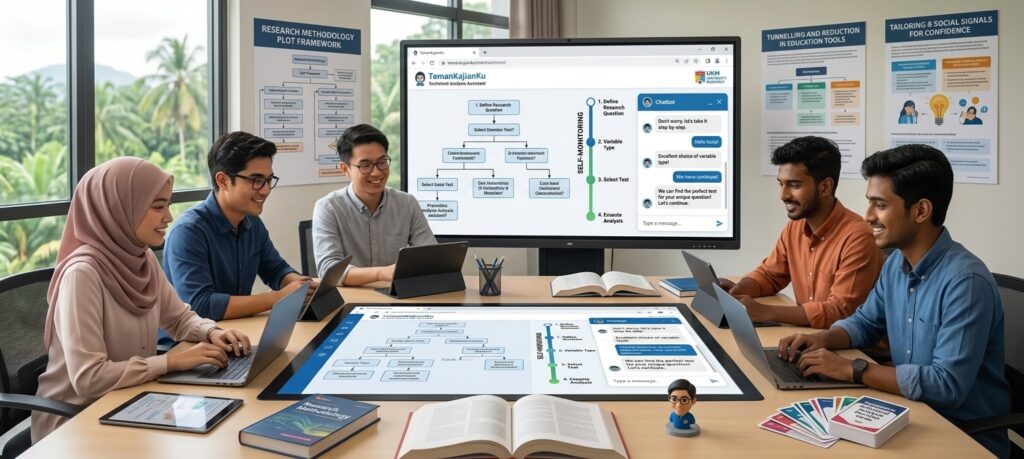
This post summarizes the paper titled ‘The Evaluation of a Persuasive Learning Tool using Think-Aloud Protocol’. Click here to read: DOI For many postgraduate and undergraduate students, navigating complex research methods and statistical analyses can feel overwhelming. While universities offer general Research Methodology courses, students often struggle when deciding which specific statistical or sampling techniques fit their unique research questions. Without clear, timely guidance, decision paralysis sets in, leading to delayed progress and heightened academic stress. Although e-learning applications aim to support independent learning, many fail because they lack the persuasive design needed to keep students engaged and confident throughout the decision-making process. To tackle this challenge, a research team from Universiti Kebangsaan Malaysia (UKM) developed TemanKajianKu(Study Buddy)—a web-based statistical analysis assistant designed using the Persuasive Learning Objects and Technologies (PLOT) framework. To evaluate how effectively the tool supports student decision-making, the researchers conducted an empirical study using the Think-Aloud protocol with ten postgraduate students. During the evaluation, participants completed structured tasks and realistic research scenarios—such as finding the right parametric test or quota sampling technique—while verbally sharing their real-time thoughts, impressions, and decision-making processes. The qualitative findings revealed that persuasive design elements significantly enhanced the learning experience and guided students toward accurate statistical choices: Reduction: By streamlining complex statistical workflows into clear, manageable steps, the platform made research decisions feel practical and approachable. Tunnelling: Pre-determined decision paths and visual flowchart diagrams guided students step-by-step toward their target statistical methods without leaving them lost in information overload. Self-Monitoring: Visual tracking features and interactive progress indicators helped learners easily understand where they were within the analysis selection process. Tailoring: The integration of an interactive chatbot delivered customized recommendations and guidance tailored specifically to individual research parameters. Social Signals: The platform utilized encouraging, clear, and positive language via the chatbot, boosting student confidence and providing immediate emotional support during task execution. Overall, participants gave highly positive feedback, emphasizing that TemanKajianKu saved valuable time, reduced research confusion, and fostered a secure, productive learning environment. The study demonstrates that embedding persuasive design principles into educational tools transforms passive e-learning platforms into active, supportive mentors—empowering students to think critically, make informed research decisions, and excel in their academic journeys.

Research

The Impact of Virtual Collaboration Tools on 21st-Century Skills, Scientific Process Skills and Scientific Creativity in STEM

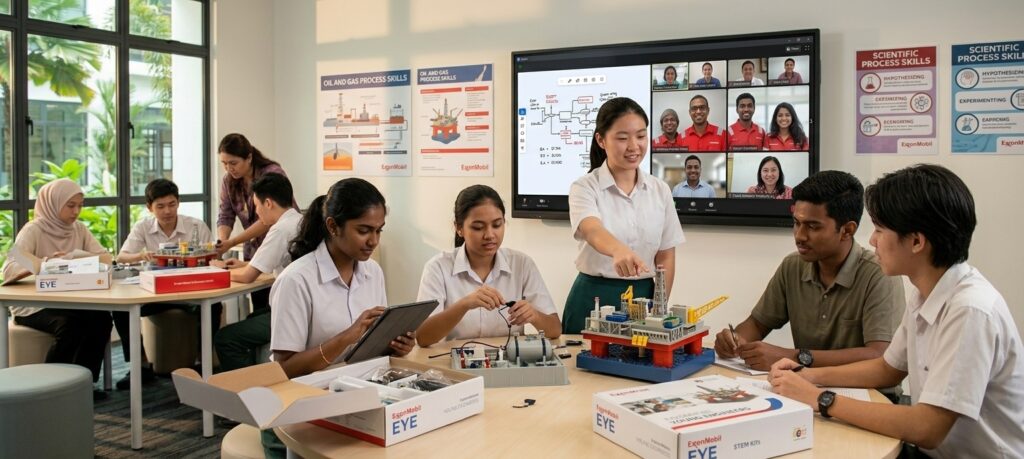
This post summarizes the paper titled ‘The Impact of Virtual Collaboration Tools on 21st-Century Skills, Scientific Process Skills and Scientific Creativity in STEM’. Click here to read: DOI The COVID-19 pandemic permanently altered how classrooms operate, turning virtual collaboration tools from optional novelties into essential lifelines for education. In STEM fields—where hands-on experimentation, group problem-solving, and laboratory work are critical—the shift to digital spaces raised urgent questions: Can online platforms truly foster complex scientific abilities, or do they weaken student engagement? A study published in the International Journal of Advanced Computer Science and Applications(2024) set out to evaluate the real-world impact of virtual collaboration tools on secondary school students in Malaysia. The research examined 520 secondary students participating in the ExxonMobil Young Engineers (EYE) program, delivered virtually via Zoom. Supported by teachers as facilitators and professional engineers as mentors, students worked through problem-based oil and gas engineering modules in interactive breakout rooms using provided physical STEM kits. Using pre- and post-intervention surveys alongside statistical analyses (such as MANOVA), researchers measured changes across three vital competencies: 21st-century skills (critical thinking, communication, digital literacy), scientific process skills (hypothesizing, data interpretation, experimentation), and scientific creativity. The results demonstrated significant overall post-program improvements across all three skill areas, proving that virtual tools like Zoom—when combined with structured, hands-on activities and real-time mentoring—can effectively drive high-level STEM learning. Interestingly, the study uncovered subtle demographic nuances: female students showed significantly higher gains in 21st-century skills compared to their male peers, suggesting that flexible virtual environments may offer an inclusive space where girls feel particularly empowered to communicate and lead. Meanwhile, regional factors significantly influenced scientific process skills, pointing to infrastructure hurdles like internet stability and device access in rural schools that must be addressed to ensure equal educational outcomes. Ultimately, the study confirms that virtual collaboration platforms are far more than emergency stopgaps—they are powerful mechanisms for democratizing access to specialized STEM expertise and building future-ready skills. By combining interactive digital spaces with real-world engineering challenges, educators can bridge geographic divides, nurture scientific creativity, and inspire the next generation of problem-solvers.

Research

Understanding Students’ Motivation and Learning Strategies to Redesign Massive Open Online Courses based on Persuasive System Development

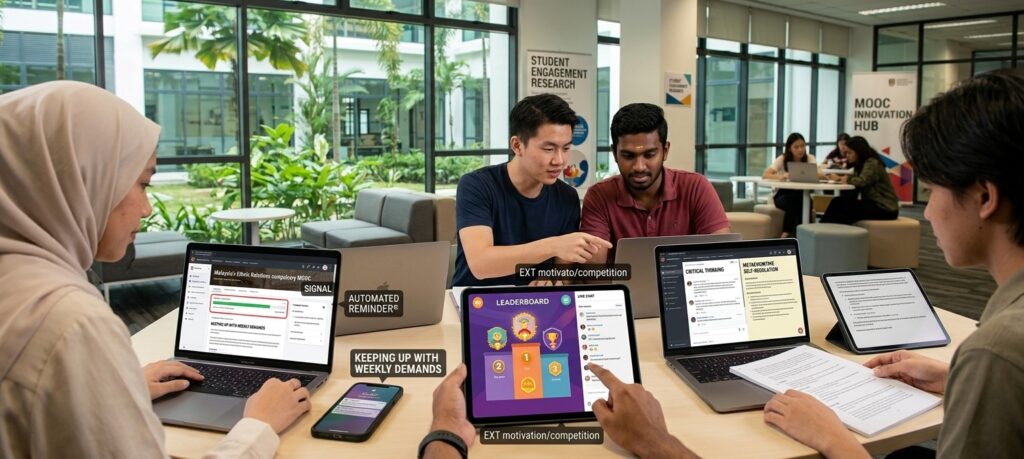
This post summarizes the paper titled ‘Understanding Students’ Motivation and Learning Strategies to Redesign Massive Open Online Courses based on Persuasive System Development’. Click here to read: DOI Massive Open Online Courses (MOOCs) have fundamentally transformed higher education by offering flexible, accessible learning beyond traditional classroom walls. Yet, despite their widespread adoption, online platforms frequently struggle to keep students fully engaged. Without face-to-face interaction or immediate peer pressure, learners often feel disconnected, struggle with time management, or lack the motivation to complete open-ended courses. To address these challenges, a study published in the International Journal of Advanced Computer Science and Applications(2019) explored how persuasive technology can be designed into MOOCs to encourage better study habits and boost academic performance. Focusing on higher education students enrolled in Malaysia’s compulsory Ethnic Relations MOOC, the researchers conducted an empirical study using the Motivated Strategies for Learning Questionnaire (MSLQ). Applying statistical techniques like Automatic Linear Modelling (ALM) and Multiple Linear Regression (MLR), the authors fulfilled the critical first phase of the Persuasive System Design (PSD) framework: uncovering the underlying motivation and learning strategies that directly drive student success. The results identified six key study behaviors that significantly predict high academic performance: Keeping Up with Weekly Demands: High-performing students consistently manage their time to keep up with readings and assignments. Regular System Engagement: Logging into the MOOC platform frequently strongly correlates with academic success. Metacognitive Self-Regulation: Successful learners actively think through topics to determine what they need to learn rather than passively skim through materials. Consistent Exam Preparation: Making time to review notes and readings before assessments prevents last-minute cramming and leads to better scores. Critical Thinking: High achievers evaluate assertions, question conclusions, and explore alternative perspectives during their studies. Extrinsic Motivation: Healthy competition—such as striving to achieve better grades than peers—serves as a powerful driver for student effort. By mapping these behaviors to Fogg’s Behavior Model, the study provides a clear blueprint for developers and educators to redesign MOOCs. Rather than relying on static lecture videos and quizzes, future online learning platforms can incorporate targeted persuasive features—such as automated reminders (signals), motivational triggers (sparks), simplified interfaces (facilitators), live chats, gamification, and mobile accessibility. Ultimately, by aligning technology with human motivation and self-regulated learning strategies, online education can move beyond passive content delivery and actively guide students toward academic excellence.

Research

Designing for Anonymity in Social Networking Platform for Student Mental Health and Well-Being

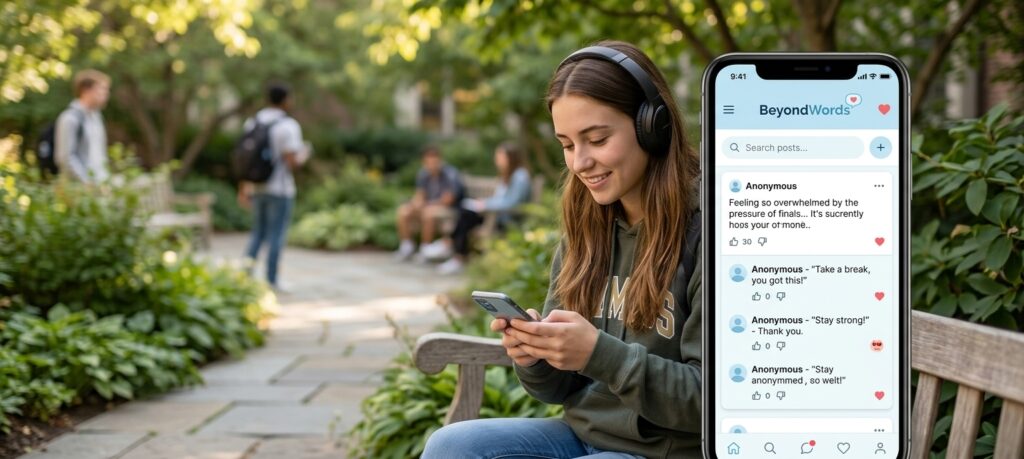
This post summarizes the paper titled ‘Designing for Anonymity in Social Networking Platform for Student Mental Health and Well-Being’. Click here to read: DOI For many university students, carrying the weight of stress, anxiety, or personal struggles can feel profoundly isolating. While students often crave a space to express their vulnerabilities and seek emotional support, the fear of judgment and the social stigma attached to mental health frequently keep them silent. To bypass these barriers, students have increasingly turned to informal, anonymous online outlets—such as Telegram confession channels—to share their hidden burdens. However, because these general messaging platforms lack structure, moderation, and dedicated support tools, they often become cluttered, chaotic, and ill-equipped to foster sustainable well-being. To address this gap, a research team from the International Islamic University Malaysia, Sindh Agriculture University, and Universiti Kebangsaan Malaysia developed “BeyondWords” a purpose-built mobile application designed to offer students a safe, anonymous social networking space for emotional expression and peer support. Built using a User-Centered Design (UCD) approach, the study explored how anonymity can be intentionally integrated into digital platforms to transform casual online confession spaces into genuine mental health safe zones. The initial user requirements analysis revealed just how essential anonymity is for student self-expression. In a survey of university students, 80% of respondents rated anonymous posting as important or extremely important, with 90% identifying privacy protection and 55% citing fear of judgment as their primary reasons for seeking anonymous outlets. Interestingly, the data exposed a powerful emotional transition: while 75% of students experienced anxiety before posting, 70% reported feeling a profound sense of relief afterward. Anonymity provided the crucial psychological safety net needed to unlock honest self-expression and emotional catharsis. Guided by these user insights, “BeyondWords” was designed to balance freedom of expression with community safety. The application incorporates features such as anonymous post submissions, categorized discussion feeds, upvoting, commenting, and user profiles. To prevent the toxicity and cyberbullying that often plague unmoderated anonymous spaces, the app integrates robust content moderation mechanisms—including user reporting tools and an administrator dashboard for reviewing flagged posts and images before they harm the community. In User Acceptance Testing (UAT), all participants successfully navigated the app and completed key tasks, confirming that “BeyondWords” offers a practical, user-friendly, and secure platform for student mental health and emotional well-being.

Research

Innovative Teaching in the Digital Age: Exploring the Role of Teachers through Pre-Service Teachers’ Lenses

This post summarizes the paper titled ‘Innovative Teaching in the Digital Age: Exploring the Role of Teachers through Pre-Service Teachers’ Lenses’. Click here to read: DOI Step into a modern classroom, and you will notice that the days of static whiteboards and simple textbook lectures are rapidly fading. Today’s educational spaces are alive with interactive media, digital platforms, and adaptive online tools. Yet, amid this technological tide, a fundamental question emerges: What does it actually mean to be a teacher in the digital age? A qualitative study published in the International Journal of Research and Innovation in Social Science (October 2025) explored this evolving identity through the eyes of 42 postgraduate pre-service teachers in Malaysia. When asked to reflect on digital innovation in education, these future educators made one thing clear—teachers can no longer be passive transmitters of pre-packaged content. Instead, they envisioned the modern teacher as an architectural designer of learning. Rather than simply displaying slides or assigning online quizzes, a teacher’s core role is to craft purposeful, interactive, and personalized learning experiences that adapt directly to their students’ unique needs and abilities. Technology alone does not transform a lesson; it is the teacher’s pedagogical creativity that gives digital tools their real purpose. However, translating creative vision into classroom reality requires more than good intentions—it demands robust digital competence and a supportive innovation culture. The pre-service teachers emphasized that digital literacy is no longer an optional add-on, but a fundamental skill for modern teaching. At the same time, they candidly pointed out systemic hurdles: limited internet access, lack of time, and inadequate training can quickly stifle even the most creative ideas. To thrive, teachers need continuous professional learning alongside institutional support that encourages experimentation without fear of failure. Ultimately, the study reveals that true digital innovation in education is not a solitary journey. When teachers collaborate, share digital resources, and engage in active professional learning communities, innovation spreads faster and takes deeper root. By connecting creative design, technological fluency, and peer collaboration, future educators are reshaping teaching into a dynamic, user-driven, and deeply human art form—proving that while digital tools may evolve, it is the teacher’s thoughtful choices that truly shape the future of learning.

Research

STEM with a Conscience: Exploring the Development of STEM Skills and Social Values among Malaysian Students

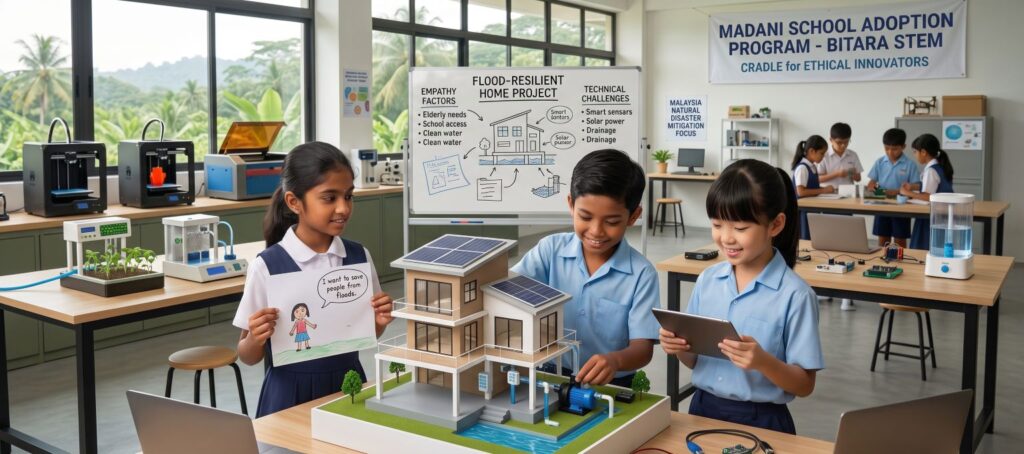
This post summarizes the paper titled ‘STEM with a Conscience: Exploring the Development of STEM Skills and Social Values among Malaysian Students’. Click here to read: DOI Ask any child what bothers them about the world, and you will hear answers full of pure heart: “I want to stop bullying,” “I want to help poor people,” or “I want to save people from floods.” They feel the pain of their communities deeply, yet they often lack the tools to bridge the gap between caring about a problem and actually fixing it. A study titled STEM with a Conscience, published in the International Journal of Research and Innovation in Social Science (Dec 2025/Jan 2026), set out to explore what happens when we give young minds the scientific foundation to turn those compassionate instincts into concrete reality. Focusing on 120 primary school students participating in Malaysia’s MADANI School Adoption Program—BITARA STEM framework, researchers asked them a simple question: “What problem would you like to solve for the benefit of your country or community in the future?” Before joining the program, the children’s written reflections revealed a strong sense of moral responsibility, but their ideas remained abstract and emotional. They knew what felt wrong in society—rising living costs, corruption, natural disasters, and social conflict—but had no tangible blueprint for how a student could ever intervene. Everything changed once the students went through hands-on, project-based STEM learning. As they engaged with scientific concepts, engineering design processes, and digital tools, their focus shifted from helpless empathy to active, analytical problem-solving. The same children who previously wished to “help flood victims” began designing flood-resilient homes and improved drainage systems. Those concerned about high living costs proposed building smart energy-saving systems and solar tech to lower household bills. Even social issues like bullying and dishonesty transformed into technical challenges, inspiring ideas for digital awareness apps and community reporting tools. This evolution captures the core spirit of Value-Based STEM Education (VB STEM)—the belief that science should never be taught in a moral vacuum. When classrooms connect technical skills like critical thinking and technological literacy with humanistic values like empathy and civic duty, learning gains a deeper purpose. STEM education ceases to be a pathway for creating technicians who merely memorize formulas; it becomes a cradle for ethical innovators who recognize that knowledge only truly matters when it is used to serve humanity.

Let’s collaborate to shape the next generation of STEM thinkers

Empowering Future Thinkers

Aras 3, Akademia Siber Teknopolis, Universiti Kebangsaan Malaysia, 43600 UKM Bangi, Selangor

Operating Hours

Monday – Thursday
8.00am – 1.00pm
2.00pm – 5.00pm
Friday
8.00am – 12.15pm
2.45pm – 5.00pm

This site can be accessed using smart devices. Best viewed using the latest versions of web browsers on a minimum resolution of 1024×768

© 2026 mystemup.com. All rights reserved.

Scroll to Top