






This post summarizes the paper titled ‘Research Landscape of PBL-STEM Education: A Systematic Analysis Review’. Click here to read DOI
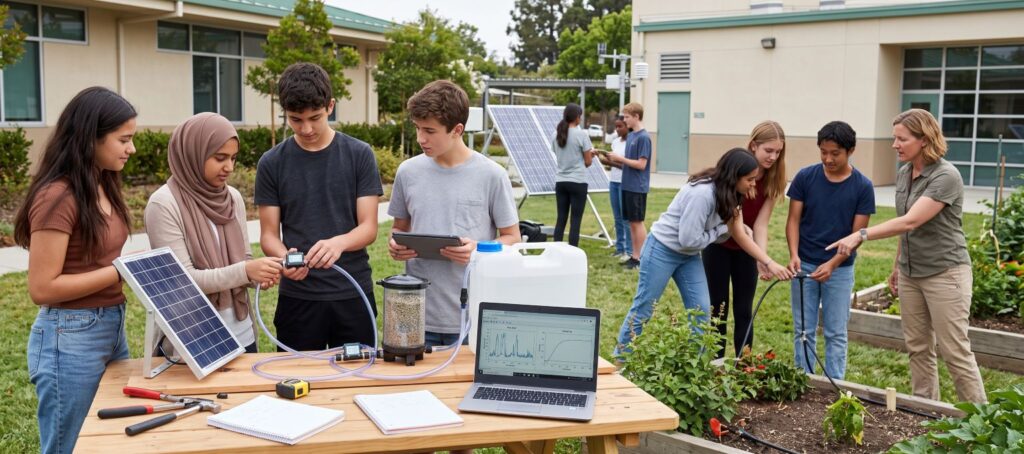
For many years, education has divided knowledge into separate subjects. Students learn science in one lesson, mathematics in another, and technology in a third. But real-world problems rarely follow these boundaries. Designing a bridge requires engineering and mathematics, developing medical equipment involves science and technology, and addressing environmental challenges often requires knowledge from several disciplines. This raises an important question: What if students were encouraged to connect these subjects through meaningful projects and real-world problems instead of learning everything separately?
To explore this direction, Zhang and colleagues conducted a systematic review and bibliometric analysis of 1,999 articles in the Scopus database. Their study examined the development of project-based learning and problem-based learning in STEM education, often discussed together as PBL-STEM. Rather than focusing on a single classroom experiment, the researchers aimed to understand broader research trends, key themes, and future opportunities to improve STEM teaching and learning.
The findings highlighted student-centered learning, interdisciplinary integration, and innovative teaching methods as key themes in PBL-STEM research. The reviewed literature emphasized developing students’ higher-order thinking skills through activities that encourage investigation, collaboration, and practical problem-solving. The researchers also identified emerging technologies as important opportunities for improving STEM education. However, they emphasized that successful PBL-STEM implementation requires appropriate curriculum development, effective assessment methods, innovative teaching models, and continued professional development for educators.
The study presents PBL-STEM as a promising direction for preparing students with the skills needed in a rapidly changing world. By connecting knowledge from different disciplines and applying it to meaningful challenges, students can develop a more practical understanding of what they learn. At the same time, educational institutions must keep improving how they design and evaluate these learning experiences. Because the future of education is not simply about teaching students more information but about helping them connect knowledge, think critically, and solve problems that extend beyond the classroom.