






This post summarizes the paper titled ‘Impact of Integrated STEM on Knowledge and Self-Efficacy Based on Teachers’ Experience’. Click here to read DOI
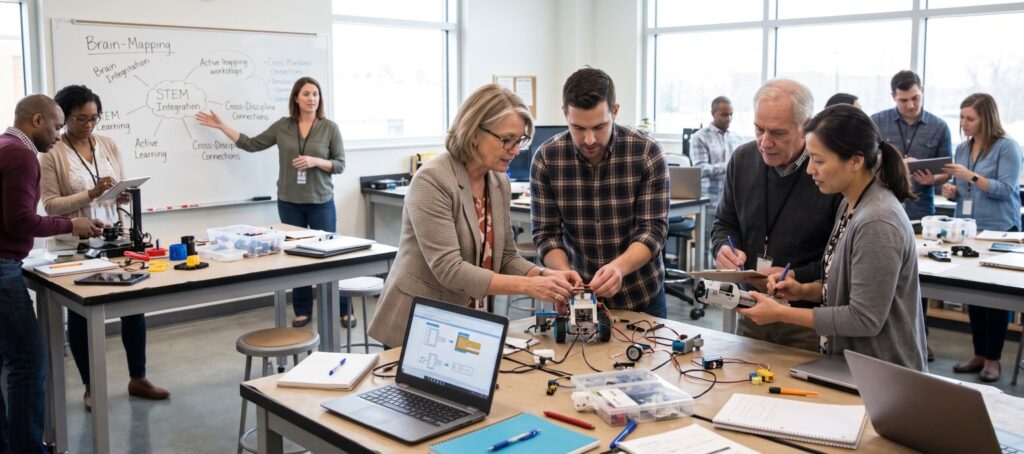
Teaching has never been a profession that remains completely unchanged. As society develops, new technologies emerge, new knowledge becomes available, and educational expectations continue to evolve. Imagine a science teacher who has spent many years explaining scientific concepts through traditional classroom lessons. Suddenly, that teacher is expected to connect science with technology, engineering, and mathematics through integrated learning activities. Although the teacher may have years of experience, introducing a new teaching approach can still be challenging. This raises an important question: How do teachers’ experiences influence their knowledge and confidence in delivering integrated STEM education?
To investigate this issue, Rasul and colleagues conducted a survey of 816 teachers who had participated in a STEM Training of Trainers program. The study examined teachers’ knowledge, attitudes, and self-efficacy toward STEM integration, with particular attention to differences in teaching experience. Self-efficacy refers to teachers’ belief in their ability to carry out teaching tasks successfully, which is especially important when educators are expected to introduce unfamiliar methods.
The findings showed that teaching experience was associated with teachers’ knowledge, attitudes, and self-efficacy toward integrated STEM education. This suggests that educators may differ in how they understand and approach STEM teaching depending on their professional backgrounds. The study also emphasized the importance of preparing teachers to connect STEM disciplines rather than treating science and mathematics as completely separate subjects. Providing appropriate training and support can help teachers develop the understanding and confidence needed to implement innovative teaching strategies.
Ultimately, the study reminds us that educational improvement does not depend only on changing the curriculum or introducing new learning methods. Teachers must also be prepared to understand and implement those changes effectively. Professional development is therefore an important part of successful STEM integration. Even the most experienced teachers must continue learning, adapting, and growing if they want to prepare their students for a constantly changing world.