






This post summarizes the paper titled ‘Co-creating an Inclusive Science, Technology, Engineering, and Mathematics Program: A Gender-Responsive Approach’. Click here to read DOI
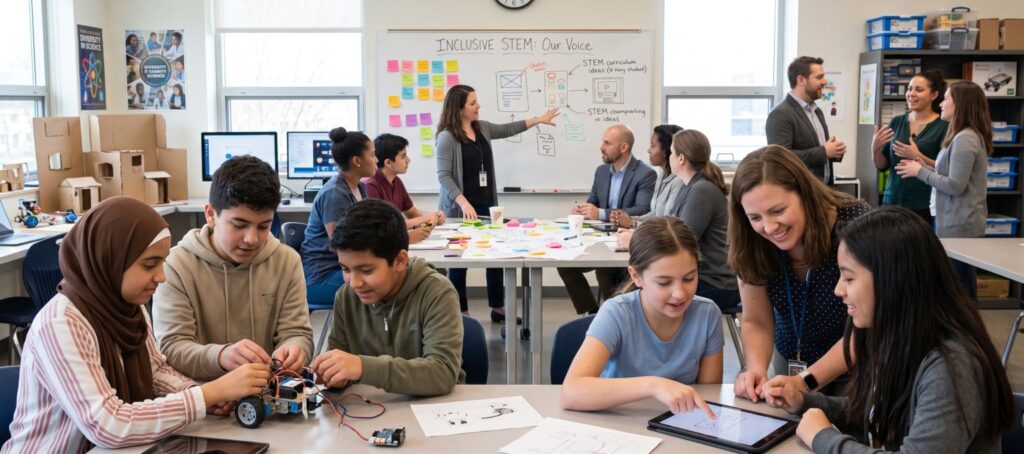
Every student deserves the opportunity to learn, participate, and succeed. Yet even when students enter the same classroom, their learning experiences may not be equal. Some students feel confident sharing their ideas, while others hesitate because they feel excluded or believe certain subjects aren’t meant for them. In STEM education, where gender-related expectations can shape participation and career aspirations, these differences can affect students’ educational experiences. This raises an important question: How can we create a STEM learning environment where every student feels included, supported, and valued?
To investigate this issue, the researchers conducted a qualitative study involving 47 stakeholders. Through focus group discussions and interviews, we explored how to develop inclusive STEM programs through curriculum co-creation and gender-responsive approaches. Rather than viewing curriculum development as something controlled entirely by educational authorities or teachers, the researchers examined how involving different stakeholders could create learning experiences that better reflect students’ needs and interests.
The findings emphasized the importance of collaboration, participation, and awareness of gender-related differences in educational experiences. When students and stakeholders help design educational programs, they can contribute ideas that make learning more relevant and engaging. Gender-responsive teaching also encourages educators to recognize potential barriers to participation and develop strategies that create fairer learning opportunities. The researchers highlighted that inclusive education is not simply about providing access to classrooms but also about ensuring that students feel empowered to participate meaningfully.
Finally, the study shows that inclusive STEM education requires careful planning, shared decision-making, and a willingness to understand different perspectives. Teachers and educational institutions should create environments where students can express their interests, contribute ideas, and develop their abilities without unnecessary barriers. Education becomes truly inclusive not when everyone is expected to learn the same way, but when everyone has a meaningful opportunity to succeed.