






This post summarizes the paper titled ‘The Impact of Virtual Collaboration Tools on 21st-Century Skills, Scientific Process Skills and Scientific Creativity in STEM’. Click here to read: DOI
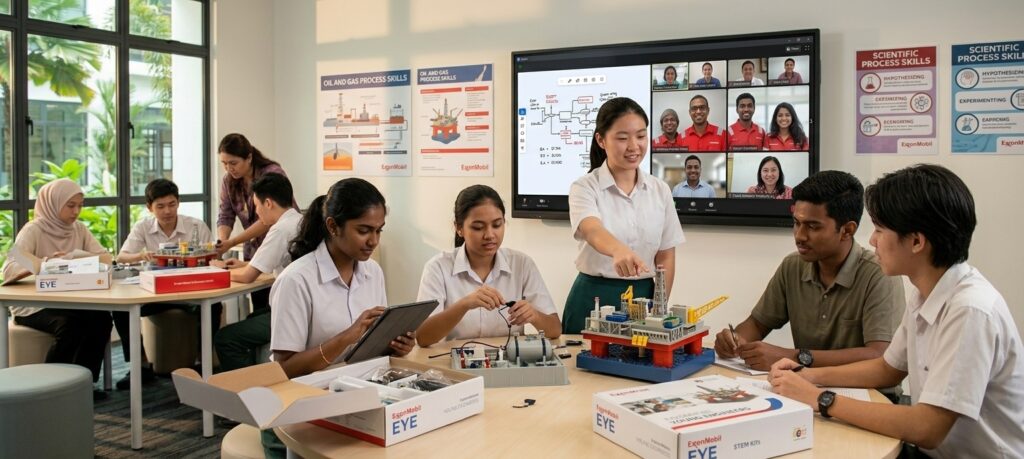
The COVID-19 pandemic permanently altered how classrooms operate, turning virtual collaboration tools from optional novelties into essential lifelines for education. In STEM fields—where hands-on experimentation, group problem-solving, and laboratory work are critical—the shift to digital spaces raised urgent questions: Can online platforms truly foster complex scientific abilities, or do they weaken student engagement? A study published in the International Journal of Advanced Computer Science and Applications(2024) set out to evaluate the real-world impact of virtual collaboration tools on secondary school students in Malaysia.
The research examined 520 secondary students participating in the ExxonMobil Young Engineers (EYE) program, delivered virtually via Zoom. Supported by teachers as facilitators and professional engineers as mentors, students worked through problem-based oil and gas engineering modules in interactive breakout rooms using provided physical STEM kits. Using pre- and post-intervention surveys alongside statistical analyses (such as MANOVA), researchers measured changes across three vital competencies: 21st-century skills (critical thinking, communication, digital literacy), scientific process skills (hypothesizing, data interpretation, experimentation), and scientific creativity.
The results demonstrated significant overall post-program improvements across all three skill areas, proving that virtual tools like Zoom—when combined with structured, hands-on activities and real-time mentoring—can effectively drive high-level STEM learning. Interestingly, the study uncovered subtle demographic nuances: female students showed significantly higher gains in 21st-century skills compared to their male peers, suggesting that flexible virtual environments may offer an inclusive space where girls feel particularly empowered to communicate and lead. Meanwhile, regional factors significantly influenced scientific process skills, pointing to infrastructure hurdles like internet stability and device access in rural schools that must be addressed to ensure equal educational outcomes.
Ultimately, the study confirms that virtual collaboration platforms are far more than emergency stopgaps—they are powerful mechanisms for democratizing access to specialized STEM expertise and building future-ready skills. By combining interactive digital spaces with real-world engineering challenges, educators can bridge geographic divides, nurture scientific creativity, and inspire the next generation of problem-solvers.